
Creating a multi-page children’s book or illustrated digital storybook used to require thousands of dollars in freelance illustrator fees or months of manual graphic design work. AI visual tools promised to change all of that overnight, but creators quickly hit a massive wall when trying to generate coherent multi-page books. In this comprehensive head-to-head comparison, I analyze whether Storybook Studio or Midjourney provides the better overall system for publishing market-ready storybooks today.
So, What Exactly Is Storybook Studio?
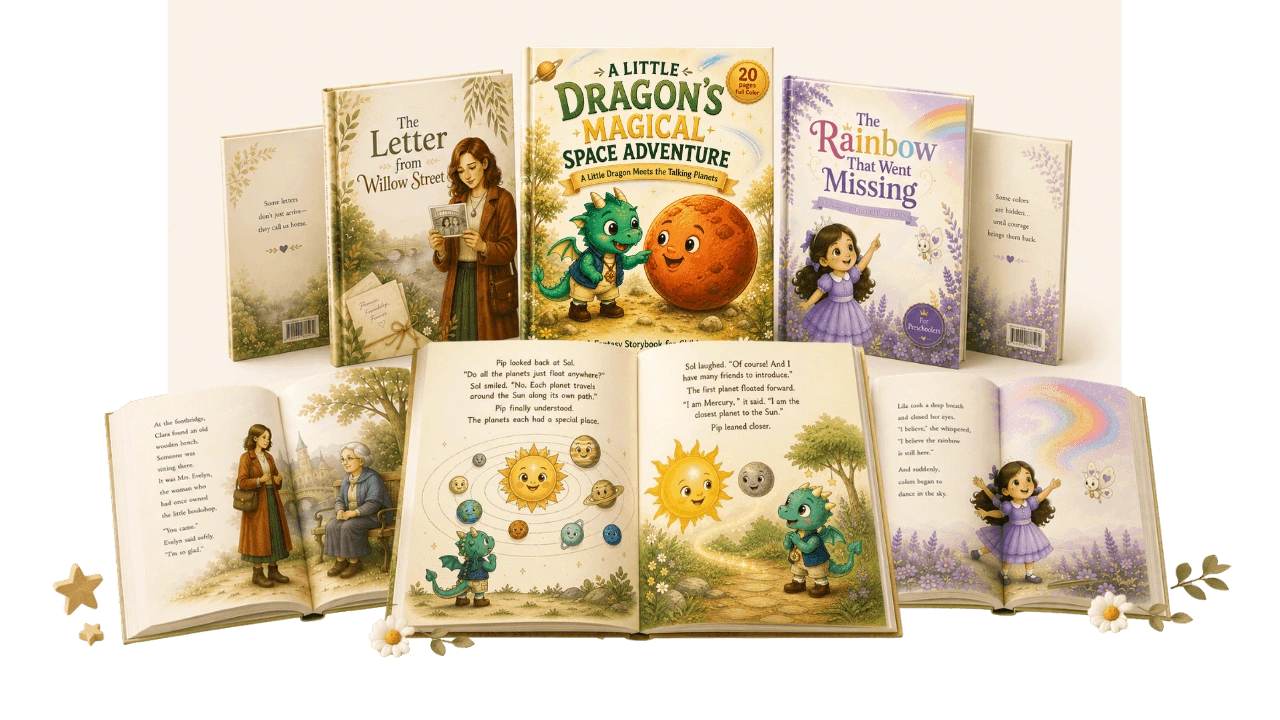
Storybook Studio is a complete four-module AI creation system engineered to turn a single concept word or simple sentence into a fully illustrated, multi-page storybook complete with matching cover designs.
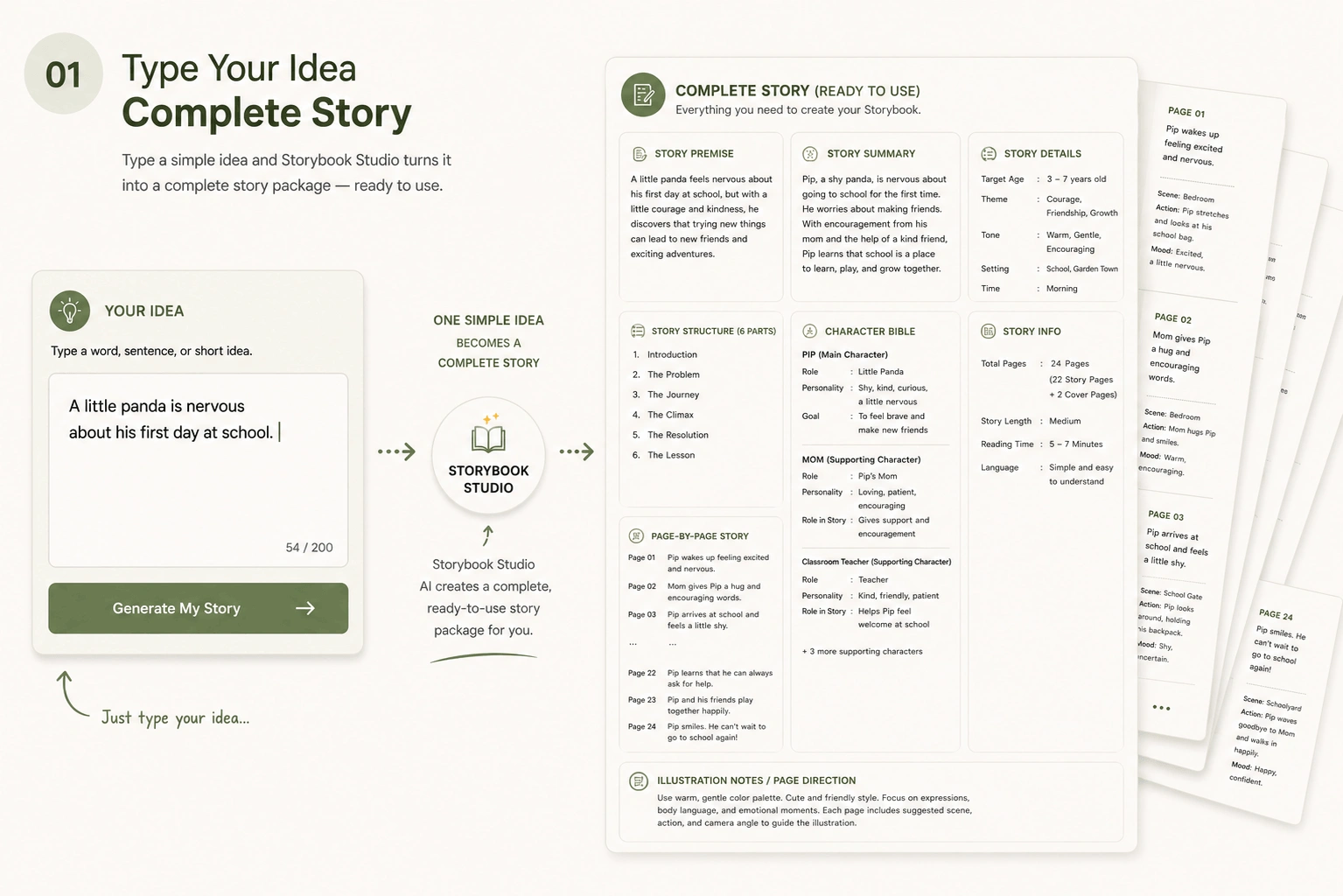
Step 1: Enter your core topic idea into Module 1 to automatically generate a complete narrative script, chapter breakdowns, and a dedicated character bible.
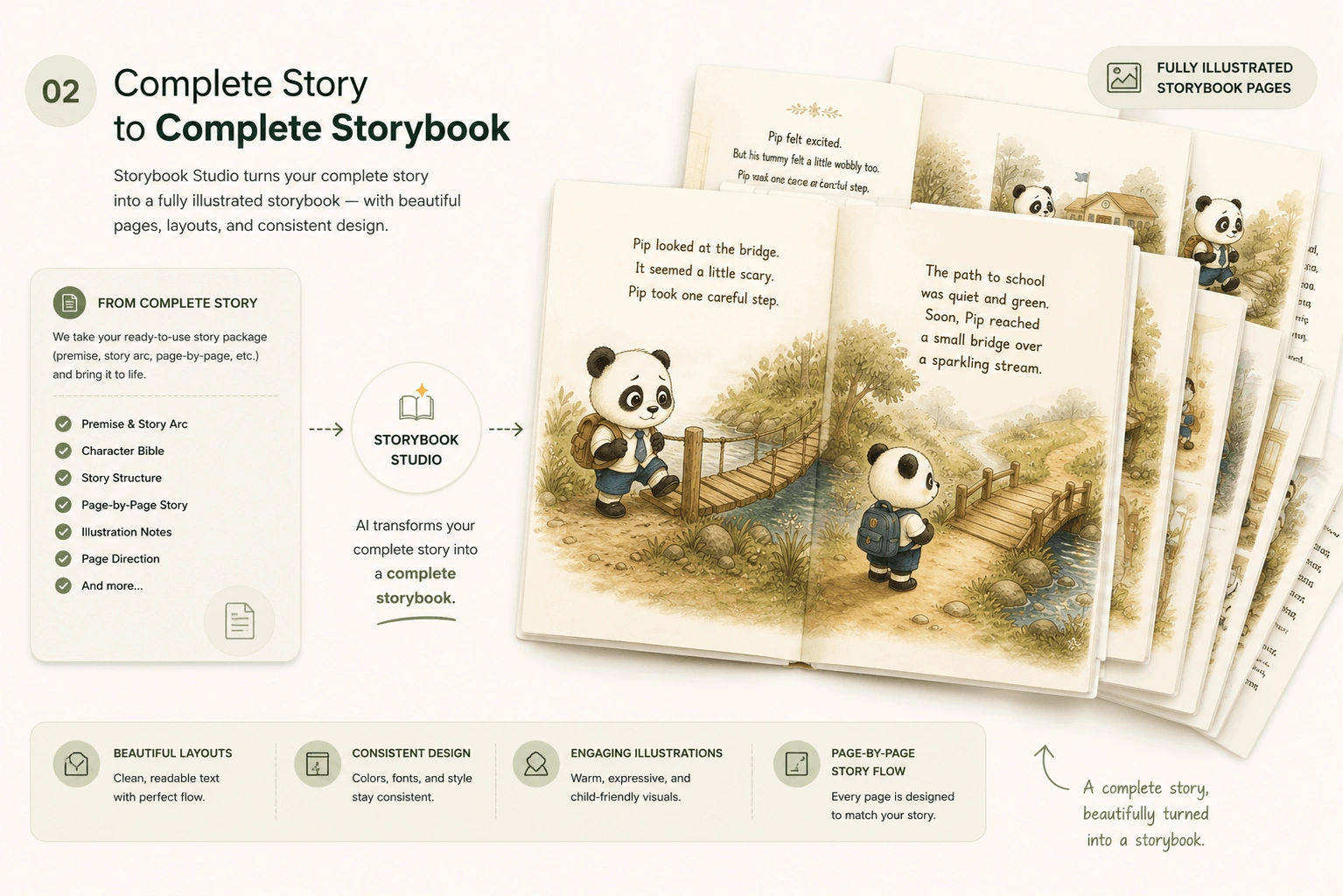
Step 2: Copy your story scenes directly into Module 2 to output visual storybook pages with consistent artistic layouts across every page.
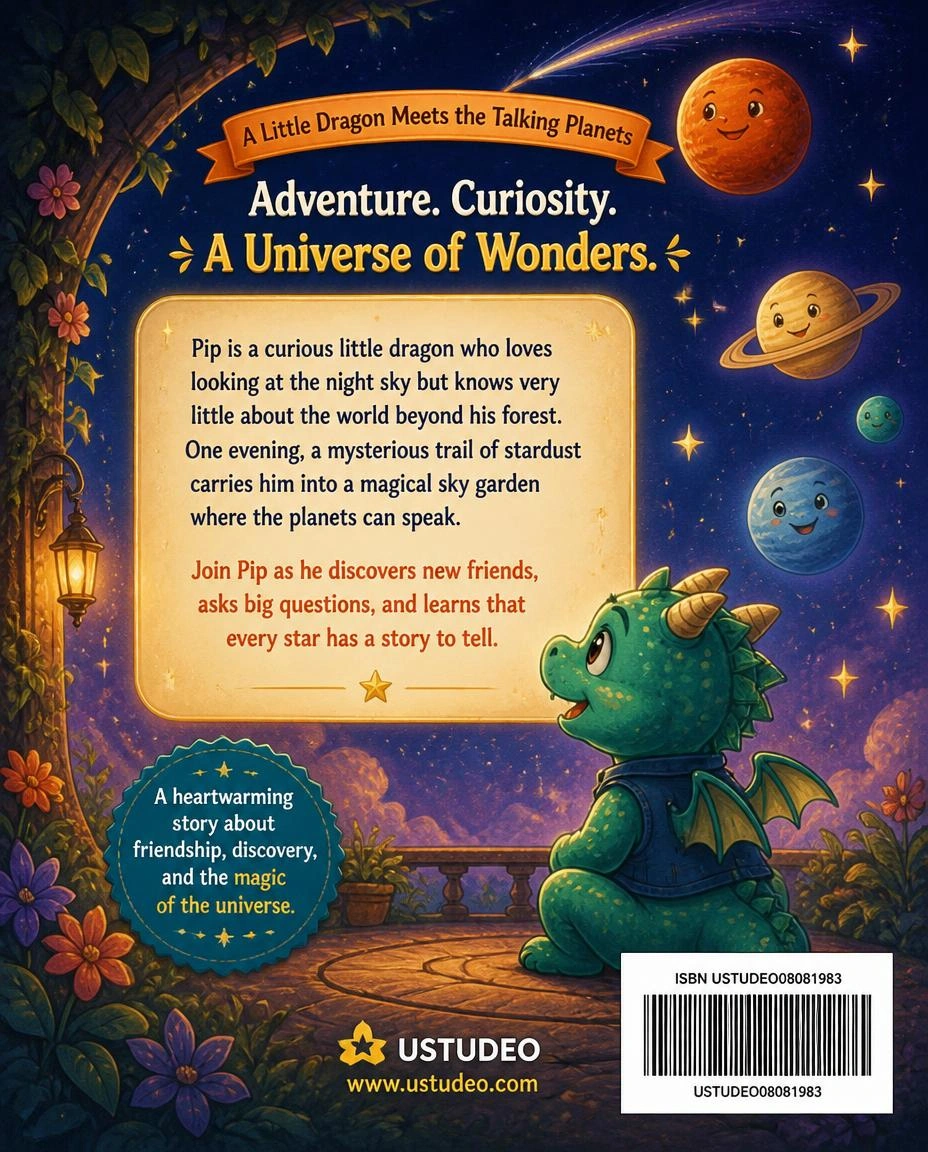
Step 3: Transfer any generated interior page into Module 3 to assemble a print-ready front and back book cover complete with titles, back cover summaries, and barcode placeholders.
Step 4: Apply Module 4 prompts to immediately re-render your entire book into 20 distinct artistic styles like watercolor, papercut, or 3D character renders.
When I first loaded up the system, I felt genuinely hesitant because visual prompt engineering on my own usually consumes entire weekends without good results.
I entered a basic sentence about a friendly forest dragon and watched the workflow build coherent narrative spreads in less than ten minutes.
The relief of skipping complicated parameter codes made the whole publishing process feel surprisingly fast and effortless.
Storybook Studio vs Midjourney: Which Is Better for Storybooks?
Comparing storybook studio vs midjourney requires looking beyond raw image rendering quality to examine actual publishing completion speeds.
Midjourney is unquestionably one of the most powerful visual image generators on the planet today.
It creates breathtaking standalone digital art pieces with photorealistic lighting and intricate textures.
However, generating a single striking picture is completely different from publishing an entire 28-page children’s storybook.
In Midjourney, keeping the exact same character appearance across 20 distinct story scenes presents an exhausting operational challenge.
You must constantly manage complex parameters like character references (`–cref`), style references (`–sref`), and seed numbers.
Even with advanced command flags, Midjourney often alters a character’s clothing, facial proportions, or hair color between consecutive frames.
Furthermore, Midjourney does not write your text script, build your character bibles, or format your front and back cover spreads.
You have to jump back and forth between separate text generators, Discord channels, and graphic design software like Canva or Photoshop.
Storybook Studio takes a radically different approach by acting as a complete end-to-end framework.
It connects scriptwriting, character continuity management, scene generation, and KDP cover formatting inside one cohesive system.
It utilizes proven prompting algorithms tested specifically on ChatGPT and Leonardo AI (GPT Image 2) to maintain strict visual continuity.
Midjourney’s Steep Learning Curve vs Storybook Studio’s Guided System
Navigating the Discord interface to prompt art in Midjourney can quickly feel overwhelming for beginner publishers.
You must learn specialized syntax commands like `–ar 3:2`, `–v 6.0`, `–no background`, and `–stylize 250` just to get structured outputs.
When an image prompt fails in Midjourney, you waste valuable GPU fast hours rerolling variations without any direct guidance.
Perhaps the biggest frustration comes when you attempt to place story text cleanly onto a Midjourney background render.
Midjourney frequently renders distorted pseudo-text directly into image pixels, requiring manual editing in external tools.
Storybook Studio removes all command-line syntax entirely through its copy-and-paste instructional modules.
Module 1 automatically establishes your complete character bible so every scene prompt references identical baseline features.
You paste the pre-formatted prompt templates directly into ChatGPT or Leonardo AI without adjusting complex technical settings.
In my tests, this structured approach eliminated 90% of the visual drift that normally ruins multi-page book projects.
I didn’t have to keep a spreadsheet of seed codes or fight with Discord bot notifications while building out chapters.
The workflow guides you directly from initial idea to complete scene illustrations in three structured steps.
Feature Deep-Dive: Analyzing Storybook Studio’s Four Core Modules
To truly understand why creators consider storybook studio an alternative to midjourney, we must examine what each module actually delivers.
Module 1: Complete Story & Character Bible Creation
A successful storybook requires far more than just pretty pictures; it needs a compelling narrative structure.
Module 1 allows you to enter a single sentence like “A little dragon meets talking planets in space.”
The system expands that input into a full synopsis, target audience classification, page-by-page breakdown, and character bible.
The character bible locks in physical traits, clothing colors, and expressions before a single illustration prompt is generated.
Module 2: Multi-Page Visual Consistency Engine
Module 2 takes your page-by-page story text and translates it into ready-to-render visual scene descriptions.
It enforces consistent layout proportions so that story scenes maintain matching artistic themes throughout the book.
Whether you choose a preschool theme, young adult adventure, or family memory book, the layout framing remains unified.
Module 3: Front & Back KDP-Ready Cover Builder
Designing a book cover in Midjourney requires calculating spine widths, bleed area pixels, and trim lines manually.
Module 3 allows you to take any completed interior page render and convert it into a matching full cover wrap.
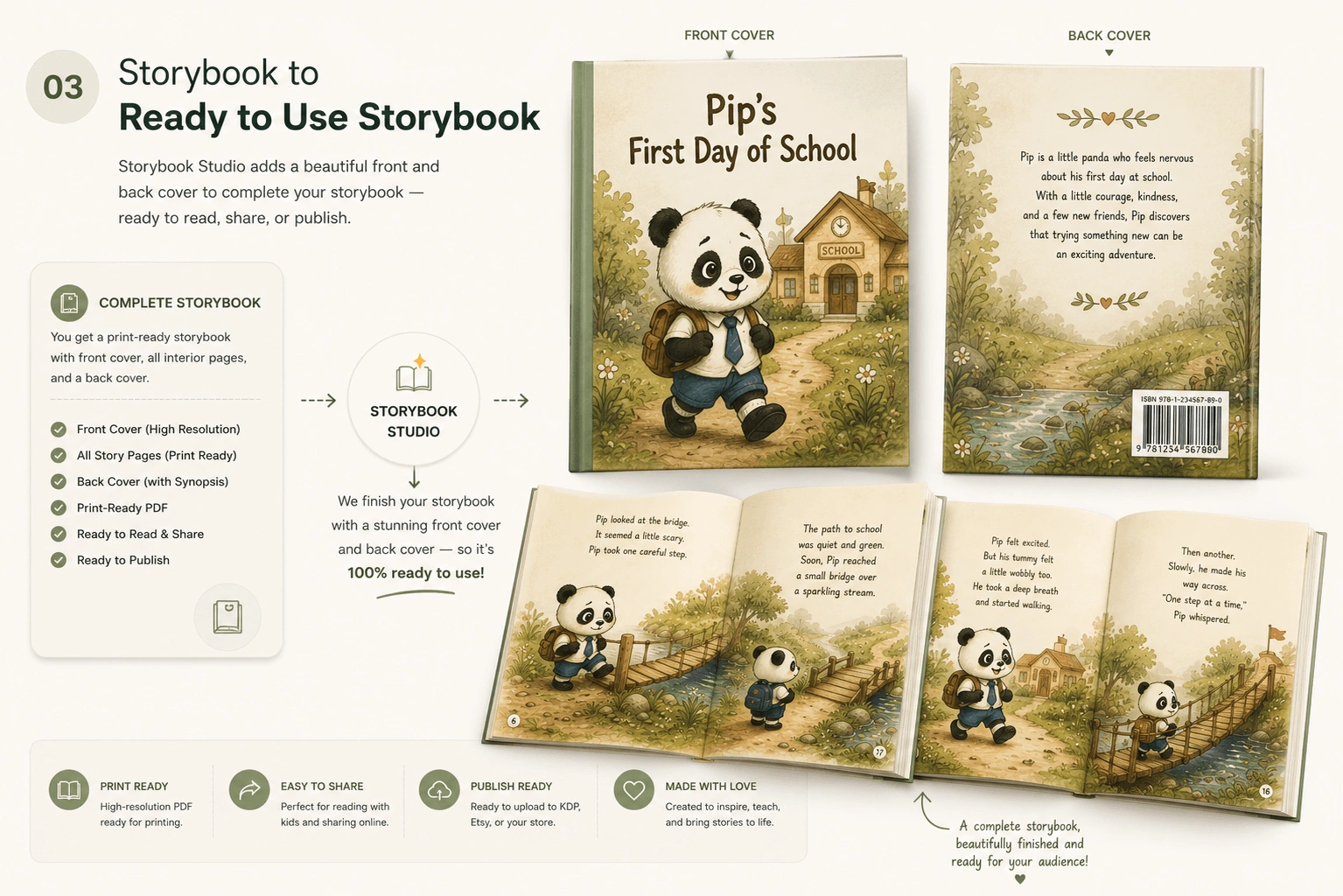
It establishes dedicated zones for main book titles, author credits, back cover synopsis copy, and standard barcode rectangles.
Module 4: 20 Aesthetic Visual Rendering Styles
One common concern with standard AI image prompting is that every generated book ends up looking like generic digital render art.
Module 4 solves this problem by supplying 20 specialized visual style extension prompts.
You can instantly re-render the exact same story into hand-drawn pencil sketches, soft pastel watercolors, layered papercut textures, or 3D digital character models.
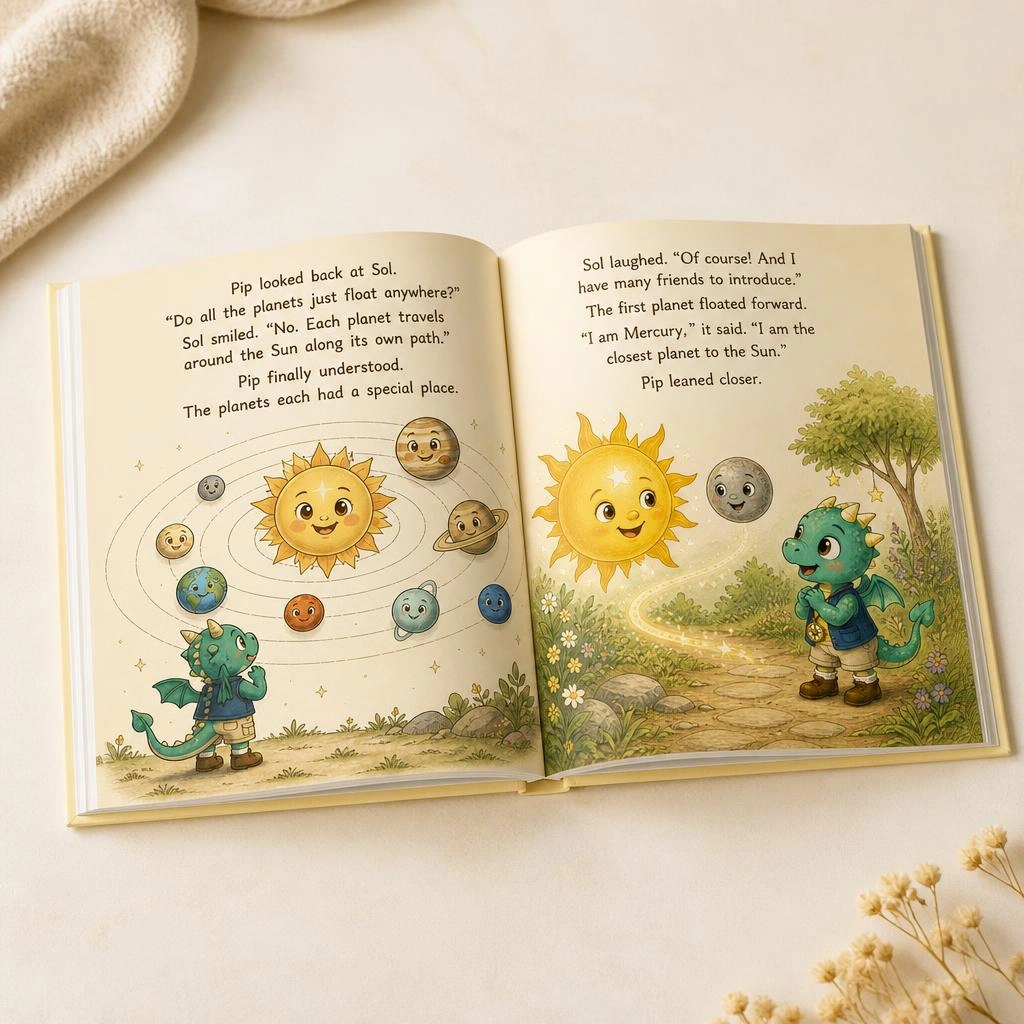
This allows you to publish multiple unique visual editions of a single book concept for different marketplace channels.
Practical Publishing Workflows: Amazon KDP & Etsy Shop Integration
If your ultimate goal is selling physical or digital books on Amazon KDP or Etsy, platform workflow compatibility is vital.
Midjourney outputs raw square images by default unless you append specific aspect ratio flags to every single prompt execution.
Even then, fitting Midjourney outputs into KDP’s standard trim sizes (such as 8.5×8.5 or 6×9 inches) usually requires external cropping.
Storybook Studio was constructed specifically around real publishing standards from the ground up.
It handles popular children’s book orientations including square, portrait, landscape, and wide digital formats effortlessly.
When preparing assets for Amazon KDP, you can read our in-depth Storybook Studio review to see detailed step-by-step formatting tests.
The included commercial license allows you to publish unlimited books, sell digital PDFs on Etsy, or produce client work without royalty fees.
Cost Analysis: Monthly Subscriptions vs One-Time Purchase
Pricing strategy represents one of the starkest differences when comparing storybook studio pricing with Midjourney.
Midjourney operates strictly on a recurring monthly subscription model.
Their Basic Plan starts at $10 per month for limited GPU hours, while their Standard Plan costs $30 per month.
If you generate multiple book drafts and reroll dozens of test prompts, you can quickly burn through fast GPU hours and require the $60/month Pro tier.
Over the course of a single year, maintaining Midjourney access will cost you anywhere from $120 to $720 in recurring subscription fees.
Storybook Studio costs a regular retail price of $17 as a one-time payment with zero monthly subscription fees attached.
Furthermore, readers can check Storybook Studio pricing details to access a special limited-time promo code `STORI03` that saves an extra $3.
That drops your total one-time investment down to just $14 for full lifetime access to all four modules.
Because Storybook Studio runs via accessible AI frameworks like free or standard ChatGPT and Leonardo AI, your operational cost per book drops close to zero.
For independent self-publishers and casual creators, avoiding monthly recurring software bills is a massive financial victory.
Is Storybook Studio Legit or a Scam? Full Reality Check
Whenever a new product offers lifetime access at a fraction of subscription competitors, potential buyers naturally question its legitimacy.
Is storybook studio better than midjourney, or is it just clever affiliate marketing hype?
I conducted a thorough reality check on the product, testing its prompts against real publishing scenarios.
First, Storybook Studio is not a standalone software program that requires software downloads or heavy GPU installations.
It is a structured prompt engineering and workflow framework designed specifically for ChatGPT and Leonardo AI (GPT Image 2).
The vendor is completely transparent about this fact on their primary checkout details.
It gives you the exact prompts, script builders, character bible templates, and cover formatting rules needed to bypass hours of manual experimentation.
Second, the offer is backed by a legitimate 30-Day Money-Back Guarantee through WarriorPlus payment processing.
If you try the framework and decide it doesn’t align with your storybook creation goals, you can request a full refund within 30 days.
There are no hidden recurring rebills or mandatory upsells required to complete basic storybooks.
It is a legitimate, beginner-friendly toolkit that delivers exactly what it promises on the landing page.
Pros and Cons: Head-to-Head Comparison
To help you weigh your options objectively, here is a detailed breakdown of strengths and weaknesses for both platforms.
| Evaluation Feature | Storybook Studio | Midjourney |
|---|---|---|
| Primary Focus | Complete multi-page storybook creation system | Standalone AI artwork rendering engine |
| Pricing Model | $14 one-time payment (with code STORI03) | $10 to $60 recurring monthly subscription |
| Character Consistency | Guided Character Bible prompts (high continuity) | Requires manual `–cref` syntax flags and seed tracking |
| Story Scriptwriting | Built-in Module 1 script and synopsis generator | None (Requires separate LLM tools) |
| Book Cover Creation | Dedicated KDP-ready front & back cover module | Requires external layout assembly in graphic design tools |
| Ease of Use | Beginner friendly, step-by-step copy/paste workflow | Steep learning curve inside Discord interface |
| Commercial Rights | Commercial License included with purchase | Included only on paid monthly subscription plans |
Storybook Studio Pros
- Unified Workflow: Moves you seamlessly from a one-sentence idea to finished manuscript and cover assets.
- High Visual Consistency: Dedicated character bible structures keep character features stable across scenes.
- Incredible Value: One-time payment of $14 eliminates ongoing monthly software overhead.
- Multiple Render Styles: 20 bonus visual styles allow diverse artistic directions from pencil to 3D.
- Zero Technical Experience Needed: Built for non-technical authors, educators, parents, and self-publishers.
Storybook Studio Cons
- Requires Third-Party AI Access: Relies on ChatGPT or Leonardo AI to process the structured prompt modules.
- Not a Graphic Editor: Does not feature direct raster image painting brushes or vector editing canvases.
Midjourney Pros
- Unrivaled Raw Art Detail: Produces industry-leading photorealistic visual textures and lighting.
- Active Community: Massive Discord user base sharing artistic prompt ideas daily.
- Deep Parameter Control: Unmatched flexibility for experienced prompt engineers who enjoy granular command tweaks.
Midjourney Cons
- High Recurring Cost: Expensive monthly fees accumulate quickly over long publishing projects.
- Difficult Continuity: Maintaining multi-page character consistency requires tedious parameter hacking.
- No Narrative Tools: Does not generate story scripts, page breakdowns, or text formatting layouts.
Final Verdict: Which Tool Should You Choose for Storybooks?
Choosing between Midjourney and Storybook Studio ultimately depends on your exact goals as a creator.
If you are an experienced digital artist looking to render individual high-resolution portfolio art, Midjourney remains an exceptionally strong choice.
However, if your goal is publishing complete children’s storybooks, KDP titles, or Etsy digital downloads efficiently, Storybook Studio is undeniably the superior option.
Storybook Studio solves the real-world operational problems of multi-page publishing.
It writes your script, builds your character bible, enforces visual layout consistency, and formats your front and back cover graphics.
When you combine those capabilities with a $14 one-time price point, it provides an unbeatable return on investment.
If you have any questions regarding my testing process or setting up your workflow, feel free to reach out to me directly at admin@uprightreview.com.
I strongly recommend grabbing Storybook Studio today while the exclusive reader discount and coupon code `STORI03` remain active.