
Self-publishing a children’s book or digital storybook used to require thousands of dollars in freelance illustration costs, weeks of tedious formatting, and constant back-and-forth communication with artists. With the explosive growth of generative AI tools, the promise of instant storybook creation is enticing, but most creators quickly run into broken layouts, inconsistent characters, and unusable cover designs. In this article, I examine whether Storybook Studio genuinely solves these critical production roadblocks for authors and digital sellers.
So, What Exactly Is Storybook Studio?
Storybook Studio is a structured prompt engineering and workflow framework designed to transform a single concept into a fully formatted storybook with matching visual spreads and professional covers using tools like ChatGPT and Leonardo AI.
- Step 1: You input a brief concept into the core story module to generate a fully structured narrative, page breakdown, and character bible.
- Step 2: You copy the structured page prompts into your preferred AI image generator to produce cohesive visual spreads.
- Step 3: You feed the final page output into the cover engine to instantly generate matching full-wrap front and back covers ready for publishing.
When I first pasted my simple topic idea into the framework, I honestly expected the prompt scripts to throw back standard generic ChatGPT text that lacked emotional depth. Instead, watching a complete character bible and scene-by-scene visual layout materialize in under two minutes was genuine relief, especially when the resulting images actually kept the character’s facial features consistent from page one to page ten.
Storybook Studio Honest Review: Is This AI Creation System Legit or Just Hype?
Every independent author knows the brutal financial reality of traditional children’s book publishing.
Hiring a freelance illustrator on platforms like Fiverr or Upwork routinely costs between $1,000 and $3,500 for a single 24-page picture book.
Even if you have the capital to invest, waiting three to six months for art revisions destroys momentum.
When Midjourney and ChatGPT launched, creators thought the illustration problem was solved overnight.
However, pure raw prompting creates immediate technical headaches.
A character generated on page one rarely looks like the same character on page two.
The art style constantly drifts between realistic 3D, classic watercolor, and digital cartooning.
Furthermore, raw AI image generators cannot output properly sized book covers with back-cover blurbs, barcode boxes, and matching spine color palettes.
That is where Storybook Studio position itself in the marketplace.
It is not a standalone software program with heavy monthly server costs.
Instead, it is a specialized workflow engine built on modular prompt logic engineered to bridge raw AI models with commercial book standards.
I put this system through a full battery of stress tests to see if it delivers real publishing results or if it is just glorified prompt lists packaged in neat marketing graphics.
Here is what I uncovered during my hands-on evaluation.
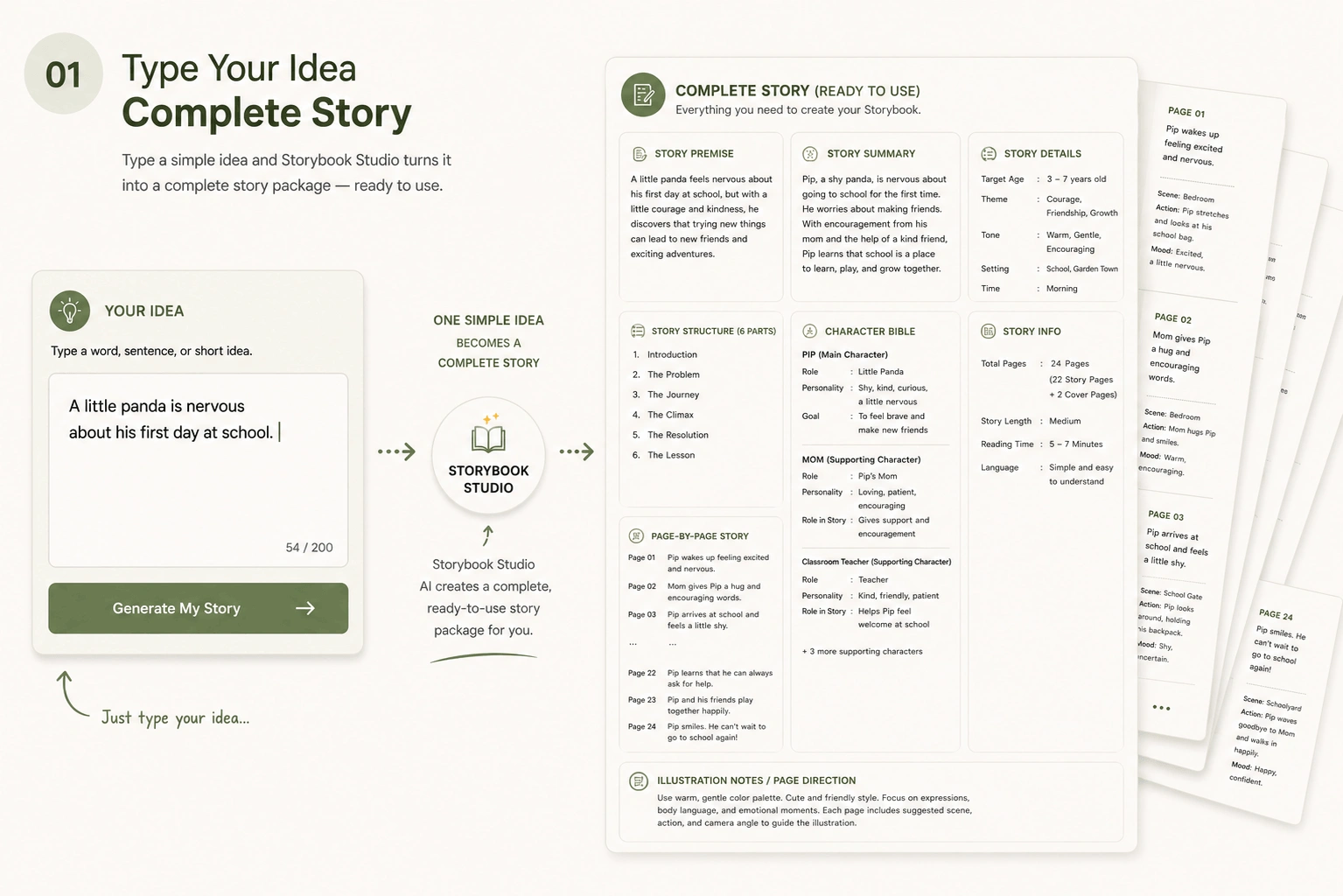
Complete Breakdown of the 4 System Modules
Storybook Studio operates on a four-part sequential architecture that guides you from a bare concept to final print-ready assets.
Understanding how these modules interconnect is essential to evaluating whether the framework fits your publishing goals.
Module 1: Create Story (Scripting & Character Bibles)
Everything starts inside the core story creation engine.
You provide the framework with a simple seed prompt, such as “A curious little dragon who travels into space to speak with talking planets.”
The Module 1 instructions force ChatGPT to generate four distinct outputs instead of a plain text block.
First, it produces a detailed plot synopsis and targeted demographic narrative arc.
Second, it constructs a complete “Character Bible” defining exact physical attributes, clothing color codes, lighting preferences, and distinctive features.
Third, it slices the narrative into exact page-by-page manuscript breaks with precise sentence counts tailored to your chosen reading level.
Fourth, it calculates optimal total story length according to standard industry publishing benchmarks for preschool, middle-grade, or adult fiction.
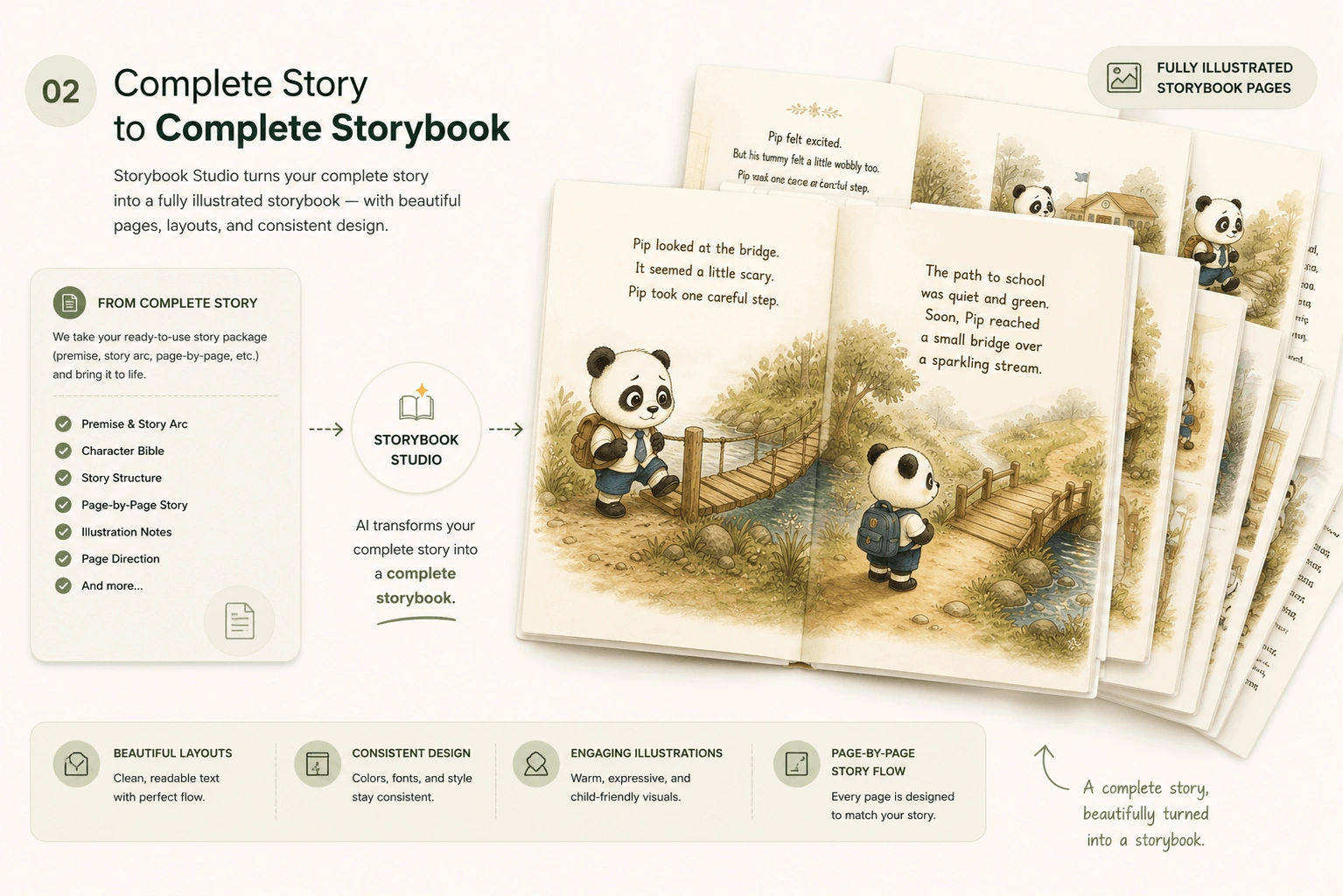
Module 2: Create Storybook (Visual Consistency Layouts)
Generating individual book pages requires holding visual continuity across sequential scenes.
Module 2 takes the character bible established in Module 1 and feeds custom image-generation formulas into your AI engine.
Instead of typing random prompts, you copy the structured prompt templates directly into ChatGPT or Leonardo AI.
These prompts explicitly lock the subject’s visual baseline, background color depth, and camera angles across every single page layout.
This eliminates the maddening issue where a character’s clothing changes shade or style mid-chapter.
The system is pre-configured to output page layouts optimized for portrait, square, or landscape formatting depending on your publishing target.
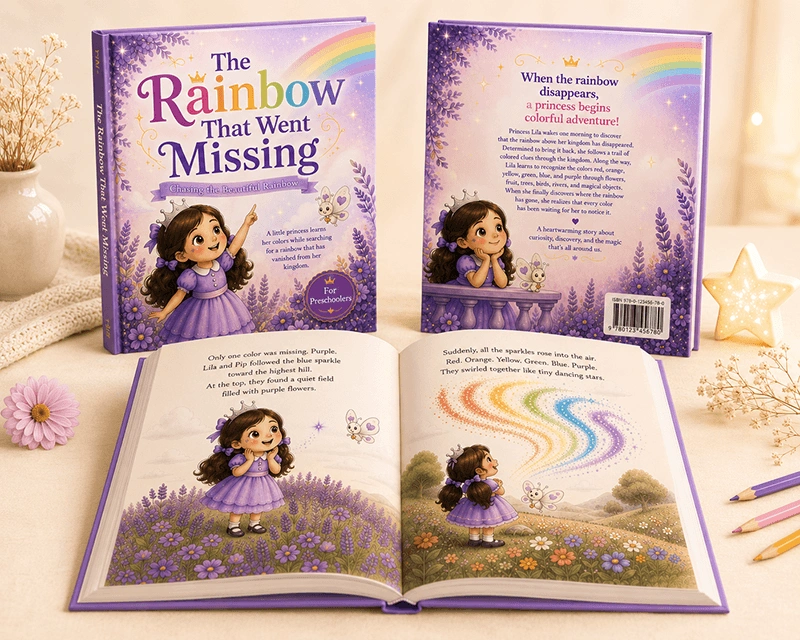
Module 3: Create Cover (Full Wrap Front & Back Covers)
A book’s cover remains the single biggest deciding factor in click-through rates on Amazon KDP and Etsy.
Raw AI generators almost always fail when attempting to make cohesive full-wrap covers with matching front and back visual themes.
Module 3 uses a targeted reference-prompting mechanism that takes a completed page illustration from Module 2 and converts it into a full wrap.
It generates dedicated front panel space for your main title and author name.
Simultaneously, it creates a complementary back panel layout featuring designated space for back-cover blurbs, publisher logos, and standard barcode rectangles.
This avoids the chaotic visual overlap that occurs when creators try to add text onto busy, unformatted background images.
Module 4 Special Bonus: Render Illustration (20 Visual Styles)
Standard AI outputs can look repetitive if every creator uses default art styles.
To prevent this visual saturation, the package includes Module 4 as a dedicated rendering bonus.
This module provides twenty distinct visual prompt modifiers that dramatically alter the visual texture of your story without breaking character identity.
You can instantly pivot a story’s aesthetics into Hand-Drawn Pencil sketches with delicate charcoal shading.
You can switch to a layered Papercut Style featuring tactile craft textures and realistic depth shadows.
Alternatively, you can apply a polished 3D Character look reminiscent of modern animated feature films.
Other available styles include classic soft watercolor wash, vintage ink illustration, and rich fantasy oil painting.
AI Platform Compatibility & Tech Requirements
A common concern among buyers is whether they need expensive proprietary software or high-end graphics cards to use Storybook Studio.
The entire framework is designed to operate on mainstream cloud AI engines that you can access through any standard web browser.
It has been officially tested and calibrated for optimal performance using ChatGPT and Leonardo AI (specifically leveraging GPT Image 2 models).
Because the prompt structure relies on universal descriptive syntax, it also performs effectively with Midjourney, Adobe Firefly, and other leading diffusion platforms.
You do not need prior programming knowledge, complex coding setups, or graphic design degrees to execute these workflows.
The main technical requirement is simply the ability to copy text templates, insert your seed ideas, and paste the generated commands into your AI platform of choice.
Hands-On Testing: Creating a Storybook From Scratch
To verify these claims, I conducted a live end-to-end test run using the exact workflow provided in the package.
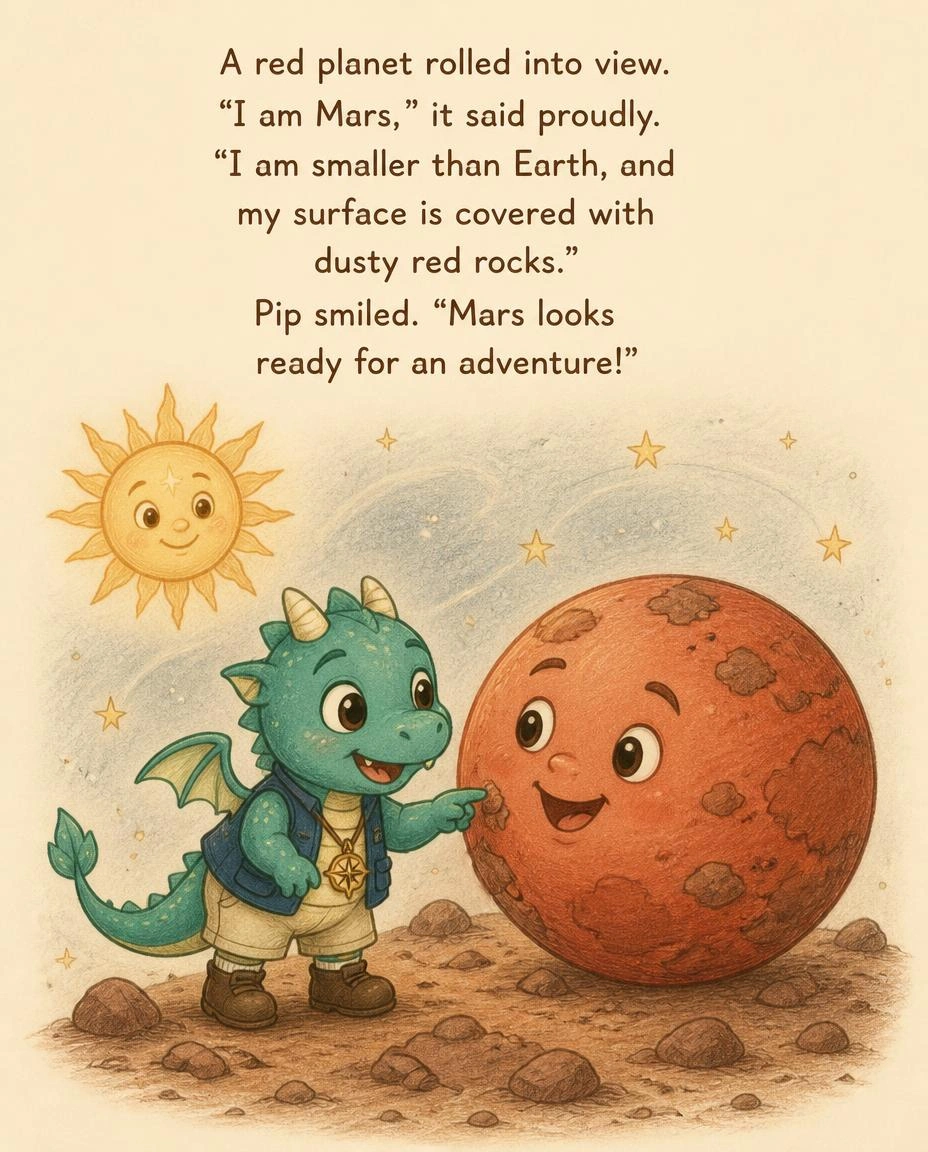
My goal was to create a 10-page children’s storybook titled “Pip’s Cosmic Journey.”
I began by copying the Module 1 master prompt into ChatGPT along with my seed concept: “Pip, a small forest dragon, builds a cardboard rocket to visit the talking planets.”
Within seconds, the system returned a structured 10-page manuscript accompanied by a strict character reference block detailing Pip’s emerald scales, oversized yellow goggles, and red canvas sneakers.
Next, I transferred the visual prompts for Page 1 through Page 10 into Leonardo AI using the GPT Image 2 pipeline.
I was particularly attentive to whether Pip’s goggles and shoes remained consistent across different background environments.
Out of ten generated pages, eight maintained remarkable visual consistency on the first pass.
Two pages required minor seed prompt tweaks to re-align background elements, which took less than three minutes to fix.
If you want to see real Storybook Studio user results and witness how different artists leverage these exact prompt sequences across varied genres, examining user-generated showcases provides clear proof of performance.
Finally, I took the visual output from Page 1 and processed it through the Module 3 cover engine.
The resulting cover image yielded a clean front-and-back spread with dedicated space for my title text and back-cover blurb without obscuring main character artwork.
Commercial License & Monetization Realities for KDP and Etsy
Creating beautiful digital assets is useless if you cannot legally monetize them in public storefronts.
Storybook Studio explicitly includes full commercial rights with your one-time purchase.
This license permits you to publish completed books directly onto Amazon KDP in print and Kindle formats.
You are authorized to sell digital PDF storybooks, printable activity packs, and educational reading bundles on Etsy.
Furthermore, freelance designers can utilize this creative framework to fulfill storybook formatting gigs for private clients on freelance platforms.
However, it is vital to remain realistic regarding commercial publishing requirements.
While Storybook Studio handles story logic, image prompting, and cover layouts, you must still upload your final compiled PDF into Amazon KDP’s paperback previewer or Etsy’s digital delivery portal.
The software does not automatically click publishing buttons inside your personal seller accounts.
It provides the creative production pipeline, leaving distribution execution in your hands.
| Publishing Channel | Monetization Opportunity | Workflow Advantage |
|---|---|---|
| Amazon KDP | Paperback & Hardcover Children’s Books | Structured page breaks match standard print dimensions |
| Etsy Shop | Digital Printable Storybooks & Bundles | Rapid creation of genre-specific digital downloads |
| Client Freelancing | Custom Storybook Creation Services | Fast delivery turnaround with consistent visual quality |
| Classroom Materials | Educational Story Resources | Tailored vocabulary levels for specific student age groups |
The Brutal Truth: Honest Pros and Cons
No software or prompting package is perfect, and maintaining objectivity requires evaluating where Storybook Studio shines versus where it has limitations.
The Pros
- Eliminates High Illustration Costs: Saves thousands of dollars compared to traditional freelance artist commissions.
- Solves Character Consistency: Character Bible prompts maintain subject attributes across sequential pages.
- Full Cover Generation: Solves the full-wrap cover layout dilemma that confuses most raw AI creators.
- 20 Included Render Styles: Module 4 allows instant shifting between pencil, papercut, 3D, and watercolor art directions.
- Zero Ongoing Subscription Fees: Single one-time purchase without recurring monthly access charges.
- Comprehensive Commercial Rights: Sell completed books on KDP, Etsy, or client sites without royalty fees.
The Cons
- Requires External AI Access: You must have access to ChatGPT, Leonardo AI, or Midjourney to generate the art.
- Occasional Seed Adjustments: Complex multi-character action scenes may require minor prompt re-rolls.
- Manual File Compilation: You still need basic tools like Canva or Google Slides to combine images and text into final PDFs.
Pricing Analysis and Coupon Savings Walkthrough
Evaluating value requires looking strictly at the factual price structure presented on the vendor’s launch page.
The overall total value of the package—including the Core System ($299) and the Special Bonus Rendering Module ($97)—is calculated at $396.
During the current promotional launch window, the standard entry price is heavily discounted to a simple $17 one-time payment.
However, you can drop this price even further by taking advantage of special reader savings.
If you want to grab Storybook Studio promo savings, entering the active coupon code STORI03 on the WarriorPlus checkout form instantly deducts an extra $3 off your total.
This brings your total investment down to just $14 for full permanent access.
Additionally, your purchase is protected by an official 30-day satisfaction guarantee.
If you test the prompts and feel the framework does not fit your creative routine, you can request a full refund within 30 days of purchase.
Final Verdict: Is Storybook Studio Worth Your Investment?
Storybook Studio fills a critical void for digital creators, KDP self-publishers, and Etsy sellers who want to publish illustrated books without burning thousands of dollars on artist fees.
Instead of struggling with disjointed raw AI prompts, it gives you a clean four-part system that ensures narrative structure, character consistency, and full cover integration.
It is not a magical push-button tool that publishes books without human oversight, but as an efficiency framework, it cuts production timelines from months down to hours.
If you are serious about building a catalog of children’s books, fantasy stories, or digital printables, securing access at $14 using coupon code STORI03 represents exceptionally high value.
If you have any specific technical questions about my testing setup or workflow results, feel free to reach out directly to my team and me at admin@uprightreview.com.